
Slip seating is when a trucking company assigns trucks to shifts or rotations instead of to individual drivers. You finish your run, park, take your belongings out, and the next driver takes the truck. Your next shift may be in a different tractor. The truck belongs to the fleet rather than to any one driver.
If you are looking the term up because a recruiter used it or a job post said “slip seat position,” this page explains what it means, why carriers use it, what it changes about a driver’s day, and how to ask about it before you sign. This page is published by Heavy Haul Solutions, a flatbed and heavy haul carrier in South Carolina. HHS assigns trucks to drivers rather than slip seating, and that policy is covered in its own section near the end. The rest of the page describes the practice as it is, whichever way you decide.
What slip seating means
The name comes from the seat. Drivers slip in and out of it. In a slip-seat operation, one tractor is kept working as many hours as the schedule allows, with different drivers taking turns. A local fleet might run a truck on a day shift and a night shift. Some larger over-the-road carriers place a returning driver in whichever tractor is ready rather than holding a specific one while he is home.
The alternative is an assigned truck: one tractor, one driver. When you are off, it waits. When you return, it is where you left it, set up the way you left it.
Slip seating is most common in LTL, port work, dedicated accounts and local delivery, where trucks run on fixed shifts. It is less common in long-haul work, where drivers live in the truck for days or weeks at a time, though some large OTR fleets use it.
Why carriers slip seat
The reasoning is sound from an operations standpoint. A tractor is the most expensive asset a carrier owns, and one that sits idle for a week is not earning. Sharing it across two or three drivers keeps it working and lets a carrier run fewer trucks than it has drivers, which matters when equipment is costly or hard to source.
There are scheduling benefits as well. Trucks on fixed shifts are easier to route through maintenance, and a carrier does not have to reassign a tractor each time a driver joins or leaves. For a fleet built around shift work, slip seating is often the practical choice.
It is a legitimate business model. Many good carriers run it, and many good drivers work under it. The question for you is what it changes about the job, and whether that matters to you.
What slip seating changes for a driver
The practical differences between a slip seat and an assigned truck show up in the daily routine.
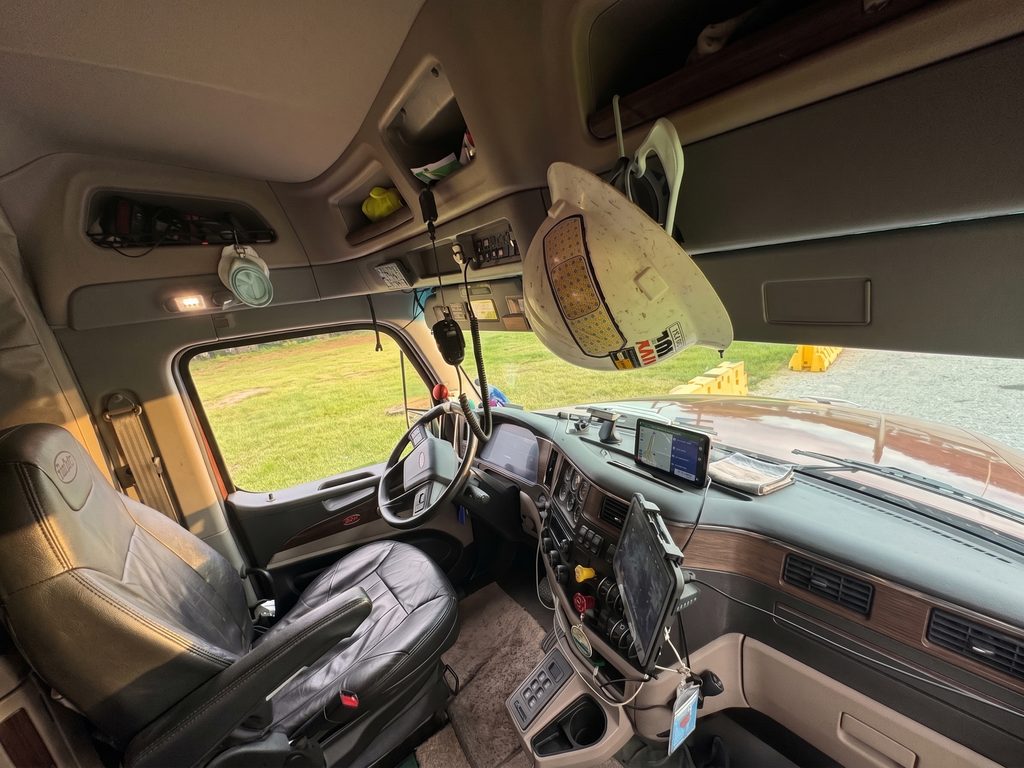
Setup. Mirrors, seat, radio, GPS and phone mount are adjusted once in an assigned truck. In a slip seat they are adjusted at the start of each shift.
Personal items. In a slip seat, bedding, cooler, tools and personal items are carried in and out each run. In an assigned truck they stay in the cab.
Condition at handoff. In a slip seat, you receive the truck as the previous driver left it and leave it for the next one. Most slip-seat fleets publish standards for this. In an assigned truck, the condition of the cab is yours alone.
Reporting issues. In an assigned tractor, one driver tracks how it runs over time. In a shared tractor, mechanical issues are reported at shift change, and slip-seat fleets typically have a written process for that handoff.
Time in the cab. An OTR driver may spend two to three weeks at a time in the truck; a local driver spends a shift. How much the assigned-versus-shared question matters tends to scale with that. It is the factor drivers most often raise when choosing between the two, in either direction.
How to ask before you sign
Slip seating is not always mentioned up front, so ask. A direct question works: “Is this an assigned truck or a slip seat?” Two useful follow-ups:
- “When I take home time, is my truck held for me, or do I get whatever is available when I return?”
- “Under what conditions would I be moved to a different truck?”
Job postings that say “slip seat,” “shared equipment” or “shift-based” are telling you the same thing. Neither answer is a red flag. It is information to have before you decide.
Where HHS stands
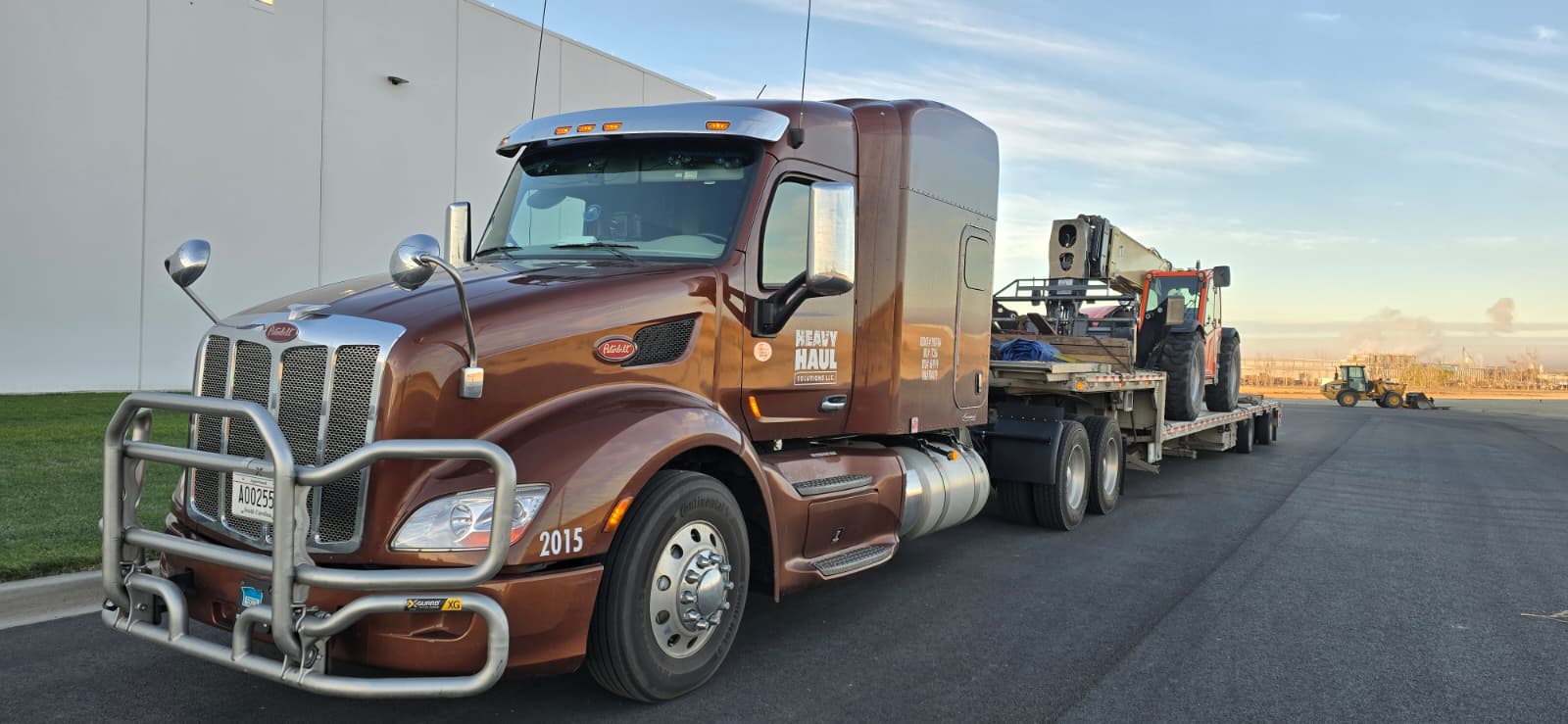
Every truck at Heavy Haul Solutions is assigned to one driver, in every position: OTR, regional and local. You set it up once. It is the same truck, with your things in it, each time you come back from home time. The only time you drive a different truck is when yours is in the shop for maintenance or repair, and you return to your own when the work is done.
That includes the local day-cab position, which is the type of job where slip seating is most common across the industry. An HHS local driver has his own truck the same as an OTR driver does.
The fleet is set up this way on purpose. The tractors are late-model Peterbilt 579s, 567s and Western Star 49Xs with APUs, inverters and fridges, maintained at the Spartanburg, SC terminal on a schedule intended to keep them on the road. OTR drivers at HHS are typically out two to three weeks at a time, and the truck stays with them for the full rotation.
Related policies: after orientation, a rider and a pet are welcome in the cab. That answer, along with the assigned-truck policy, is written down in the driver FAQs.
Questions drivers ask about slip seating
What does slip seat mean in trucking? It means the truck is shared among drivers on different shifts or rotations rather than assigned to one person. Personal items come out at the end of each run.
Is slip seating common? Common in local, LTL, port and dedicated shift work. Less common in long-haul flatbed and heavy haul, where drivers live in the truck for extended periods.
Is slip seating dangerous? Not in itself. The point drivers raise is that issues in a shared truck need to be reported clearly at every handoff. Fleets that slip seat well have a process for that.
Can I choose an assigned truck at a slip-seat carrier? Usually not, since the truck is tied to the position. If an assigned truck matters to you, ask about it during recruiting and choose a carrier that offers one.
Does HHS slip seat? No. Every HHS driver has an assigned truck in every position. See the open positions for what is hiring, and the career path for where the job goes from there.