
If you are thinking about a trucking career, you have probably heard that AI and self-driving trucks are coming for your job. It is a fair worry, and it deserves a straight answer.
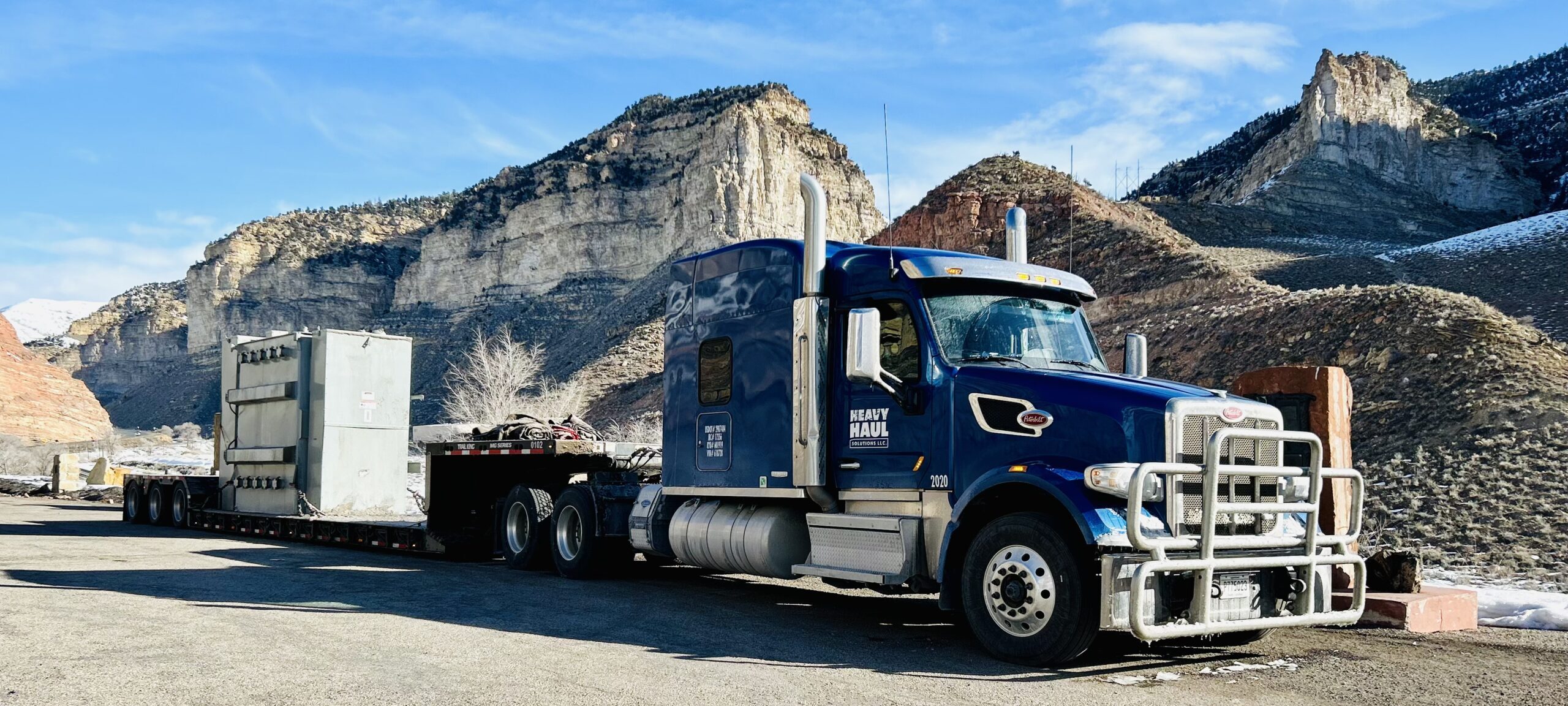
Here is ours. Driverless trucks are real, and they are already hauling freight in Texas. But they are running narrow, repeatable routes with limits on what they can carry. Heavy haul is a different kind of work. We think the freight that needs a permit, a route plan, and a person on the deck is the freight least likely to be automated anytime soon.
That is our reasoning, not a guarantee.
Are there driverless trucks on the road today?
Yes, in limited form.
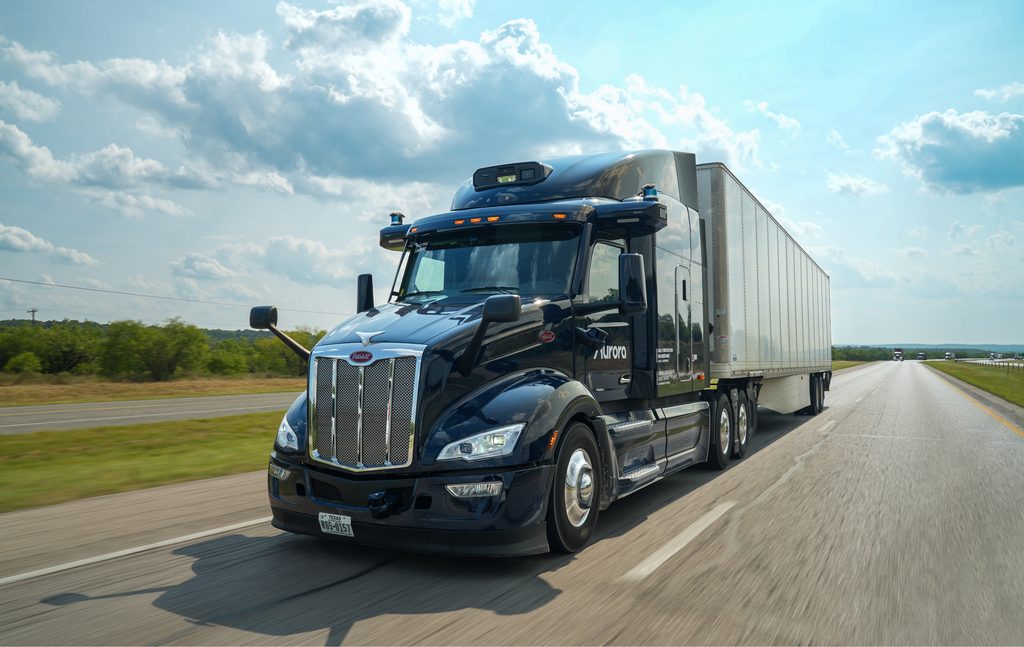
Aurora, the company furthest along in the U.S., began commercial driverless service in Texas about a year before May 2026. Its driverless routes include Dallas to Houston, Fort Worth to El Paso, El Paso to Phoenix, and Laredo to Dallas, according to TechCrunch.
On the Dallas–Houston route, which it runs for the distributor McLane, there is no safety driver who can take over. Aurora still keeps a “human observer” in the cab, who does not operate the truck. The trucks cover the long highway leg, and at the terminals in Dallas and Houston, McLane’s own drivers take over for local deliveries, such as to restaurants.
The scale is growing. Aurora plans to add routes between McLane distribution centers across the Sun Belt by the end of 2026. Hirschbach Motor Lines signed a non-binding memorandum of understanding in April 2026 to buy 500 Aurora-powered trucks, with the deal expected to close later in 2026.
Notice the pattern. These are long, predictable highway runs, moving standard freight on a single trailer type, with human drivers still handling the local end. That is where the technology has the easiest job.
What do the rules allow?
Federal rules are starting to make room for driverless trucks, but they are still narrow.
In October 2026, the Federal Motor Carrier Safety Administration (FMCSA) granted a five-year exemption that lets Level 4 autonomous trucks use cab-mounted flashing warning beacons instead of the reflective triangles that a driver normally places on the road after a stop. It runs through October 2031 and covers Aurora and any other Level 4 carrier that notifies FMCSA first.
The conditions tell you how limited today’s operations are:
- Trucks may only run on roads within the area they have been validated for.
- No hazardous materials and no passengers.
- Doubles are limited to two 28-foot trailers, and triples are prohibited.
- It bars operations that would need H, X, P, or S endorsements if a human were driving.
This is a sign of how fast things are moving, and also of how carefully the rules are drawing the lines.
What does the job outlook say?
The official numbers do not show a profession in decline.
The U.S. Bureau of Labor Statistics projects employment of heavy and tractor-trailer truck drivers to grow 4% from 2025 to 2035, which it describes as about as fast as the average for all occupations. It expects about 214,500 openings a year over the decade, many of them to replace people who retire or leave the occupation. The BLS page does not mention automation. It ties demand to economic growth and online shopping.
Projections are not promises. They are modeled estimates, and they can’t fully account for a technology shift. But they are the best public numbers available, and today they point to steady demand.
Why heavy haul is different
This section is our own analysis, based on how we run freight.
Self-driving systems work best when the road, the load, and the rules are the same every time. Heavy haul has none of those.
Every state has its own permit rules. Oversize loads move on permitted routes, and the requirements are set state by state. Permitting is getting more automated. By 2020, well over 30 states could issue some oversize and overweight permits automatically. But above certain sizes and weights, a person still has to review the route. Illinois, for example, auto-routes loads up to 299,999 pounds, but only with bridge engineer approval above 150,000.
A permitted route has to be followed exactly. An operator hauling in Virginia Beach, Virginia, was fined $35,000 for a route deviation. Attorneys got it reduced to almost $12,000, and the operator said the same mistake with a heavier load could easily have been a $100,000 ticket. That is the kind of judgment call, made in real time, that is hard to hand to software.
Securement is done by hand. Our drivers get hands-on securement training because chaining, strapping, and tarping a load is a skill that takes practice.
No two loads are the same. A highway run with a standard trailer is repeatable. A transformer, a piece of substation equipment, or a data center component is not.
We are not saying a machine could never do any of this. We are saying that each of these is a separate problem to solve, and the freight we haul stacks all of them at once.
What this means if you are choosing a career
If automation is the thing worrying you about this career, the practical answer is to build skills that are hard to copy.
That means open-deck experience: flatbed, stepdeck, and eventually heavy haul. It means knowing how to secure a load properly, how to work with escorts, and how to run a permitted route. Those skills take time to build, and they are the ones employers say they have trouble finding. (We cover the demand side in our article on whether truck driving is a good career.)
At Drive4HHS, we train drivers up through four stages, from training to superload. You can see how it works on our career path page.
Frequently asked questions
Are there driverless trucks now? Yes. Aurora runs commercial driverless trucks on several Texas routes, including Dallas to Houston. Some still carry a human observer in the cab, and the routes are limited.
Will AI replace truck drivers? Nobody knows for certain. Federal projections show 4% growth in the occupation from 2025 to 2035, but they can’t fully account for new technology. Long, repeatable highway freight is where automation is most likely to show up first.
Which truck driving jobs are least likely to be automated? Our view is that jobs involving permits, escorts, unusual loads, and securement done by hand are the hardest to automate. That includes much of oversize and heavy haul work.
Does this mean I shouldn’t become a truck driver? No. Demand is steady today. The better question is which kind of driving builds skills that last.
Ready to build skills that last?
Heavy haul is hard work, and it is work that takes a person. If you are interested, see our opportunities or call us at (864) 469-4261.