
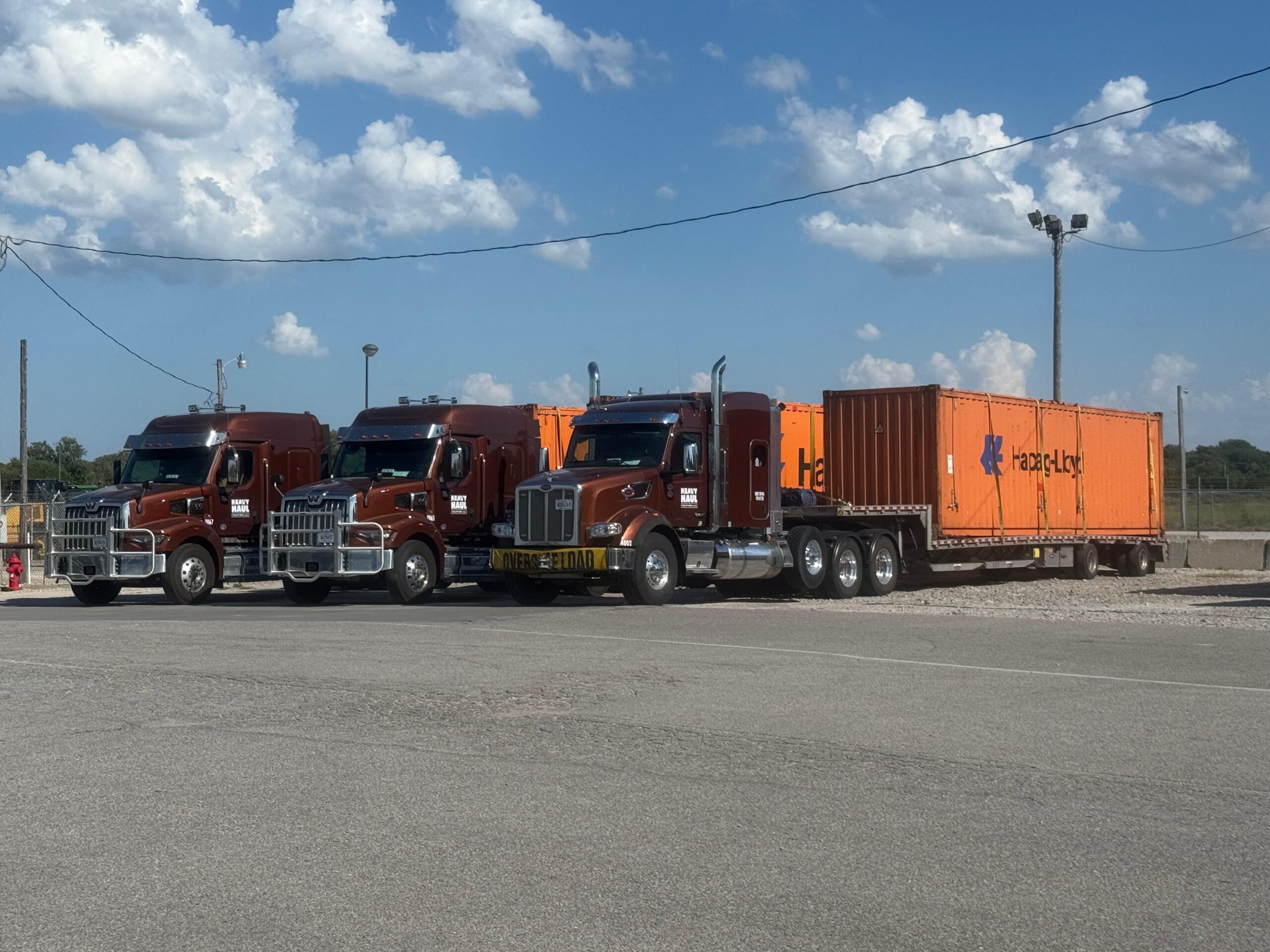
Short answer: yes, it can be. If you’re comparing truck driving careers, pay is only one part of the choice. Whether truck driving is worth it depends more on the carrier you drive for than on the job itself. We are a heavy haul carrier in Spartanburg, South Carolina, and we hire drivers, so read this with that in mind.
What the job pays
You can make a real living driving a truck, and in specialized freight you can make a very good one. We publish the pay range for every position we hire for, from local flatbed to OTR heavy haul, on our career path page, in plain numbers. We do not repeat those numbers here, because that page is the source and it stays up to date.
A few pay details are often left out of job ads. We pay for every mile, loaded or empty. The benefits page also lists detention pay, stop pay, tarp pay, extra pay for New York City boroughs and Canada crossings, health insurance after 90 days, paid time off, a 401(k) with a 3% match, and safety and fuel bonuses. If a company will not put those numbers in writing before you apply, that tells you a lot about how it will treat you later.
What you’ll actually haul
This matters more than people think, because the freight decides the work. General freight is boxes. Our flatbed and stepdeck drivers haul construction materials, transformers, fiber reels and vehicles.
Our heavy haul drivers move the infrastructure that goes into data centers and substations: control buildings, transformers, switchgear. That freight takes planning, permits and skill, and it pays accordingly.
What it costs you
Time at home is the real price.
Our local drivers are home every night. Regional drivers leave on Sunday afternoon or Monday morning and return on Thursday or Friday. OTR drivers are out two to three weeks at a time. Every carrier is different, so get the schedule in writing before you sign anything.
Open deck work is physical. You’ll throw chains, climb on loads and drag tarps that can weigh 120 pounds. It isn’t a job you do from the seat.
The first year is the hardest. Everyone here starts on flatbed and stepdeck freight. You learn securement and build a safety record before moving to specialized loads and then heavy haul. Pay rises at each step, but the first step is where most people find out if this is the right truck driving career for them.
Is truck driving dangerous?
Yes, more than most jobs. Federal workplace fatality statistics put truck drivers near the top of the list every year, and most of those deaths are crashes. Off the road, the most common injuries are to the back and shoulders, plus falls from the trailer deck.
What a company does about that is concrete, and you can ask. Our trucks and trailers are maintained at our own terminal on a schedule, not when something breaks on the highway. We teach securement hands-on, from people who have hauled the same freight you will haul. Specialized and heavy haul loads move on permitted routes, with escorts arranged before the truck rolls.
Our safety record is what wins us the freight that pays the most, so it isn’t a poster on the wall for us. We also don’t run driver-facing cameras. We’d rather have a driver who knows his truck and his load than one who’s being watched.
The part that depends on the company
Two drivers with the same CDL and the same miles can have completely different lives depending on who they drive for. These are the questions worth asking before you sign anywhere, with our answers so you can compare.
Is the truck yours? At a lot of carriers you get whatever’s in the yard that morning. Here, every truck is assigned to one driver, in every position, and it stays yours while you’re home.
Are there driver-facing cameras? Here, no.
Can your family come along? Yes. You can bring one rider and one pet of any size or breed after orientation. The full policy is one page.
Is orientation paid? Yes. Orientation is one to two weeks at our Spartanburg terminal. It is paid, and we cover the hotel and meals for the whole stay.
Is there a ceiling? Some companies hire you at a number and leave you there. Here, every step up the career path is a raise, and all of the ranges are public.
What’s in the truck? Ours are Peterbilt 579s and 567s and Western Star 49Xs, with an APU, an inverter, and a fridge in every one. Ask any carrier the same question and listen to how specific the answer is.
Who it’s a good career for
It is a good career if you want to be paid for skill, can handle time away from home, and would rather work alone than in an office. So, is trucking a good career? It can be, for the right person.
It’s a better career in specialized freight than in general freight, because the loads take real skill and the pay reflects that. It isn’t a good career if you need to be home every night and don’t want a local job, or if you’re hoping to sit in the seat and never touch a strap.
Where to start
We hire drivers with a Class A CDL, at least one year of tractor-trailer experience, age 23 or older, and a clean FMCSA Clearinghouse record. Military driving experience counts toward that year. If you just got your CDL, get your first year in somewhere, then come talk to us. Our open positions are on the opportunities page, and the driver FAQ answers most of the questions people ask a recruiter.